A father and son’s chapels place family status within Saqqara’s administrative elite
Source: “Tomb of a late Fifth Dynasty judge uncovered north of Saqqara” — Egypt Independent ↗, 8 September 2026
Archaeonews Summary
Two decorated funerary chapels belonging to an official and his father have been uncovered in a mastaba, a flat-topped tomb, in the Mariette cemetery at northern Saqqara, Egypt, near Cairo. The Spanish-Egyptian mission brings together the Autonomous University of Barcelona and Egypt’s Supreme Council of Antiquities. The university dates the latest excavation campaign to April–June 2026.
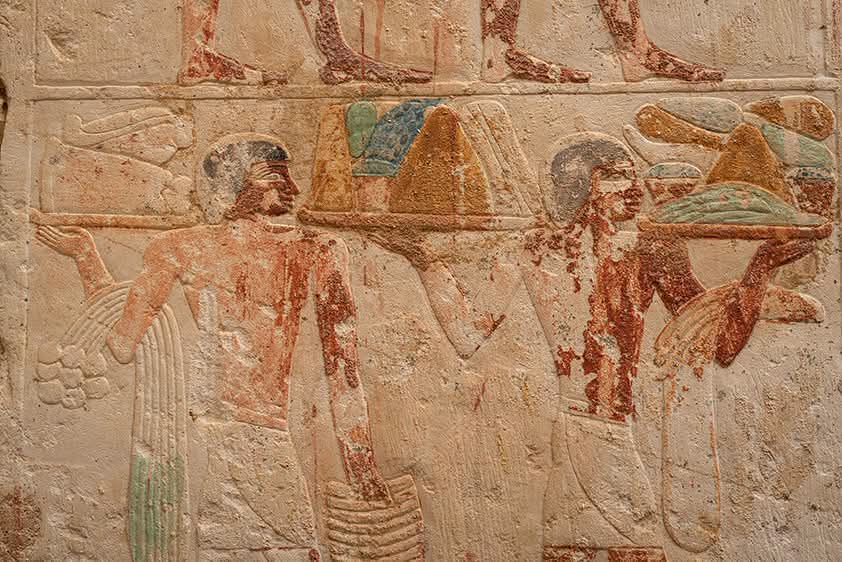
According to the ministry announcement reported by Egypt Independent, Younmin held judicial and court administrative titles, while his father Ity managed records concerning agricultural land and offerings. Reliefs depict agricultural work and offering processions, with surviving colour. The ministry assigns the tomb to the late Fifth Dynasty, under Djedkare Isesi, but the coverage does not explain the dating method. The university independently confirms work on the double mastaba, using the spellings Yunmin and Iti.
Why It Matters
The pairing gives this discovery a particular value for studying how official status was commemorated within families. Father and son occupied different administrative roles, yet their chapels belonged to one monument. That association provides evidence for a shared funerary setting; it does not, by itself, establish that either office was inherited or explain how the son’s career developed.
The excavation also has a wider spatial context. The university reports that work in this cemetery is examining streets and relationships between buildings. Read in that setting, the double mastaba could help researchers investigate how family monuments fitted into an organised burial landscape, beyond cataloguing individual titles and decorated walls.
These are findings presented at an Egyptology congress and through institutional announcements, rather than a detailed peer-reviewed excavation publication identified in the available sources. Published plans, inscription readings and the basis for the royal attribution will be needed to assess the family’s chronology and the monument’s construction history.