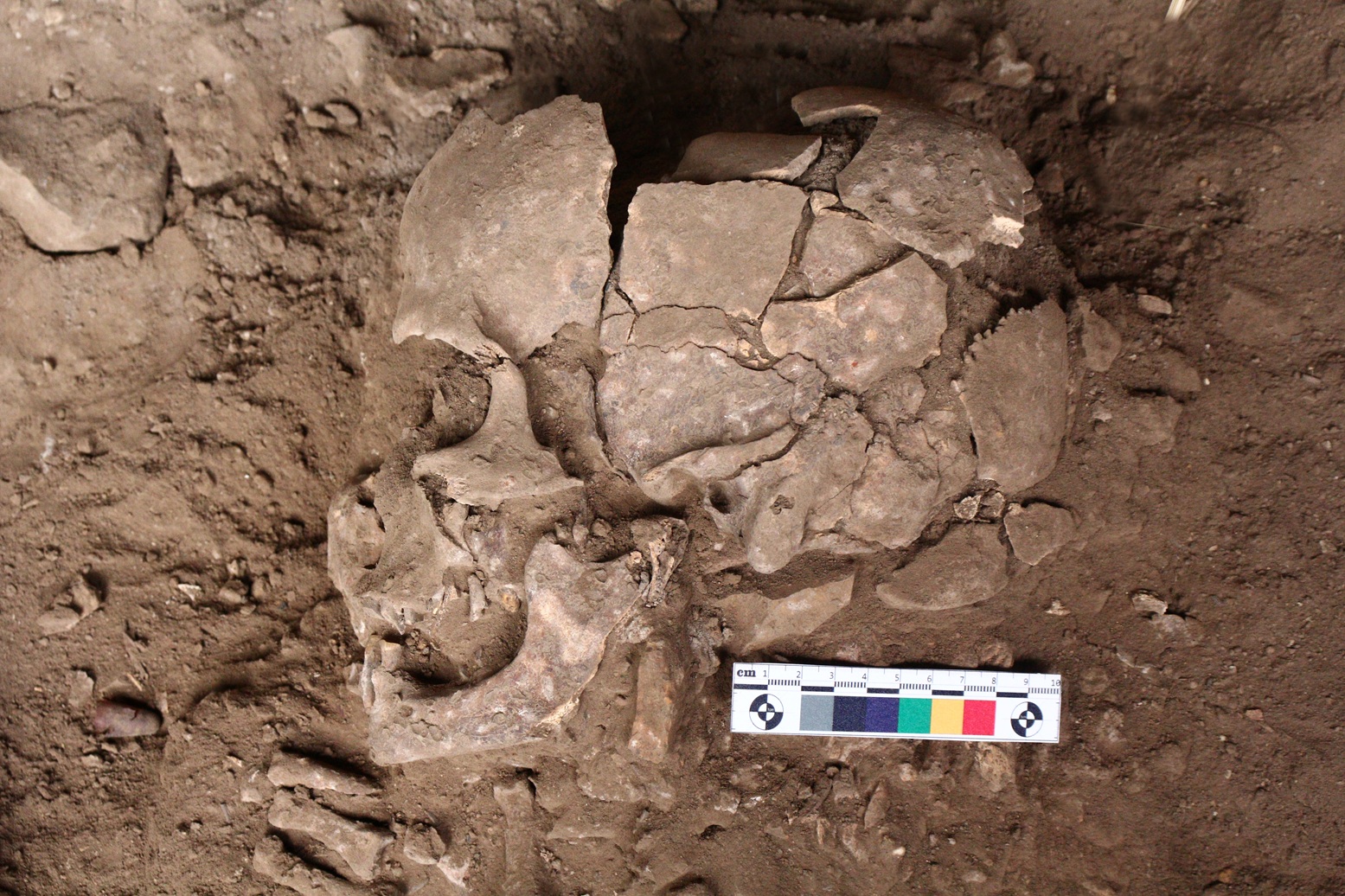
Sulawesi teeth suggest betel use began without the familiar chewing mixture
Source: “Ice Age origins of one of humanity's oldest drug habits found in Sulawesi teeth” — Griffith University ↗, 10 September 2026
Archaeonews Summary
Deep grooves and traces of arecoline, a psychoactive compound in areca nuts, have been identified in teeth from two excavated foragers in South Sulawesi, Indonesia. The remains come from Leang Bulu Bettue in the Maros-Pangkep lowlands and Leang Cappalombo 1 at Pattuku village, Bontocani. Adam Brumm and colleagues from Griffith University and Indonesian institutions interpret the damage as evidence of repeatedly sucking whole nuts.
The older individual belongs to a layer dated to approximately 25,000–16,000 years ago through uranium-series measurements of stalagmites, which track radioactive decay. The younger individual’s context dates to approximately 7,600–6,300 years ago through radiocarbon analysis of charcoal and shell. Neither range is a direct date on the person. Published in Science Advances, the study combines dental examination, chemical testing and experiments showing that intact nuts can release biologically active compounds without preparation as a chewing mixture.
Why It Matters
The important distinction is between consuming a plant and preparing the familiar betel quid. The findings suggest that a simpler practice preceded the processed mixture, opening a route for recognising stimulant use where its expected archaeological signature is absent. Leang Bulu Bettue also preserves portable art and personal ornaments: these teeth add evidence of bodily habits to a record already documenting material and symbolic activities.
The peer-reviewed study’s strength lies in combining different kinds of evidence. Dental wear suggests repeated behaviour, chemistry links the teeth to areca consumption, and experiments support a plausible mechanism. None alone establishes the complete practice.
Two individuals separated by millennia cannot demonstrate an unbroken tradition or its prevalence. Toothache relief remains a proposed motive, and laboratory responses cannot establish the sensations ancient users experienced. The defensible conclusion concerns early habitual plant use; a worldwide “first” remains dependent on preservation, dating and what counts as evidence of drug consumption.